Why Proper Drainage Is Essential to Luxury Landscape Design in Houston
Beautiful outdoor spaces depend on more than what you can see. Proper grading and drainage help protect landscapes, hardscaping, structures, pools, and the investment you have made in your property.
Explore the Importance of DrainageA Luxury Landscape Should Perform as Beautifully as It Looks
Mature trees, carefully selected plantings, custom patios, outdoor kitchens, pools, landscape lighting, and manicured lawns may define the finished appearance of a luxury outdoor space. But underneath that design is something equally important: proper drainage.
In Houston, where intense rainfall can put a property to the test, drainage should never be treated as an afterthought. It should be considered from the beginning of the landscape design process.
The best drainage system is often the one you barely notice because it was designed into the landscape from the beginning.
Houston Landscapes Face Unique Drainage Challenges
Houston properties can receive a tremendous amount of water in a very short period of time. When that water does not have a planned path away from the home and outdoor living areas, problems can develop quickly.
Standing water may collect in lawns or planting beds. Soil can wash away. Mulch can move across patios and walkways. Plant roots can remain overly saturated, while water can collect around foundations, driveways, pools, and other hardscape areas.
- Standing water in lawns and planting beds
- Soil erosion and mulch washout
- Water collecting near foundations
- Saturated plant and tree root zones
- Puddling around patios and pool decks
Drainage Should Begin With the Landscape Design
One of the advantages of planning an entire outdoor environment professionally is that drainage can be incorporated into the design instead of added later.
Before creating planting beds, patios, walkways, walls, pools, or outdoor living areas, designers should understand how water currently moves across the property and how future improvements will affect that movement.
A Drainage Plan Should Consider:
- Existing property elevations
- Natural water flow patterns
- Roof and gutter discharge
- Low areas within the landscape
- Soil conditions
- Patios, pools, driveways, and structures
- Neighboring properties and surrounding grades
Grading Is the Foundation of Good Drainage
Drainage starts with proper grading. The landscape should be shaped so water naturally moves away from the home and toward appropriate collection or discharge areas.
Even subtle elevation changes can have a major effect on how a property handles rainfall. This becomes especially important during a major landscape renovation.
Protect the Home
Proper grading helps move water away from foundations and structural areas.
Control Water Flow
Elevation changes can guide rainfall toward planned collection points.
Support Future Improvements
Pools, patios, turf, and outdoor kitchens can all alter existing drainage patterns.
Different Properties Require Different Solutions
There is no single drainage system that works for every Houston property. Professional drainage design may combine several methods depending on how water moves across the landscape.
Catch Basins
Catch basins collect surface water at low points and move it into underground drainage piping.
French Drains
French drains collect subsurface water and can help correct areas where soil remains wet long after rainfall.
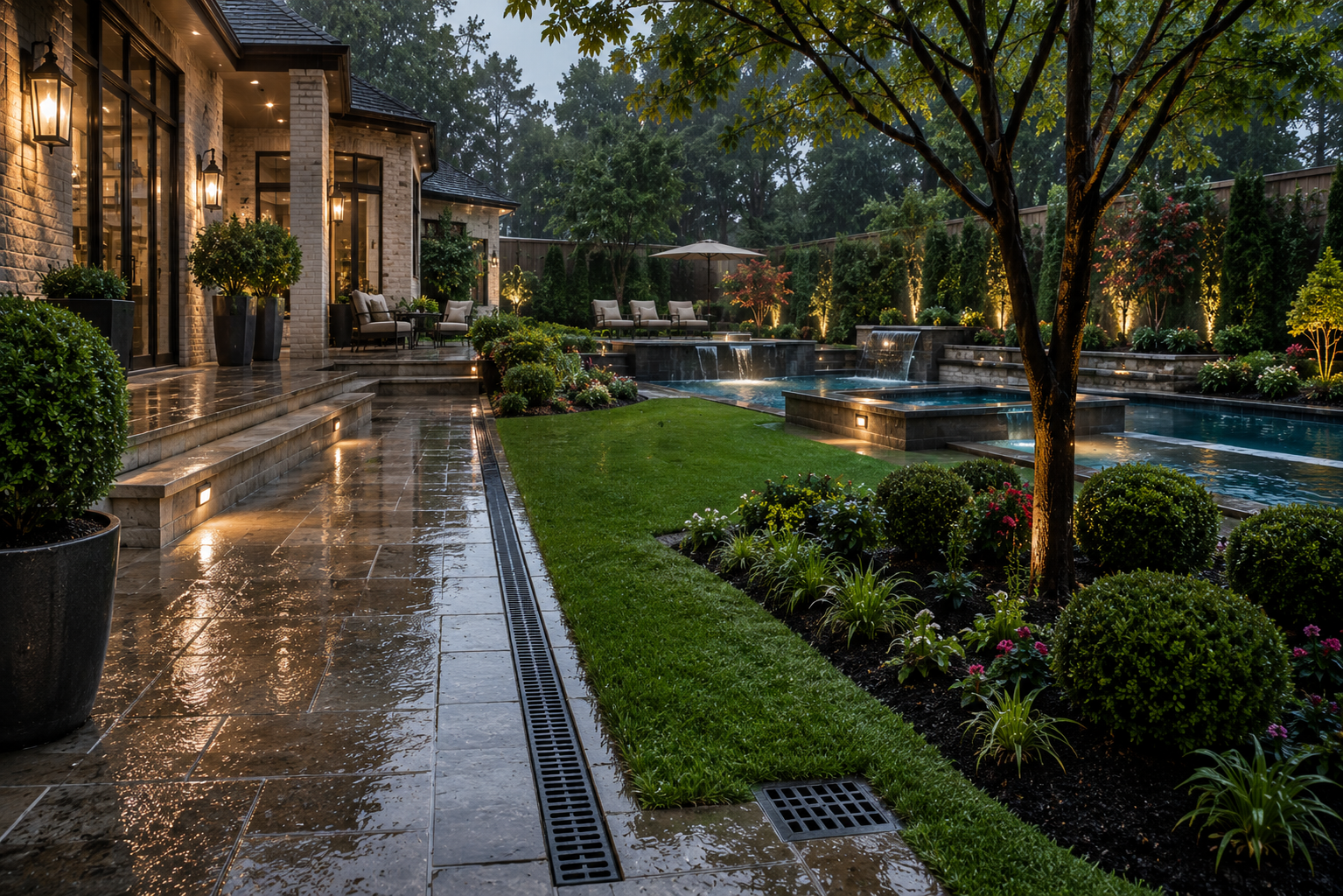
Channel Drains
Linear drains can be integrated beside patios, pool decks, walkways, gates, and driveways.
Downspout Drainage
Underground piping can move concentrated roof runoff away from the home and valuable landscape areas.
Strategic Grading
Swales and carefully shaped elevations can guide water naturally through the property.
Integrated Systems
Larger properties often perform best when multiple drainage strategies work together.
Proper Drainage Helps Protect Valuable Trees and Plantings
Too little water is a problem for plants, but so is too much. Standing water and continuously saturated soil can create stressful conditions for many landscape plants and trees.
This becomes particularly important in a luxury landscape containing mature specimen trees, large container trees, established hedges, ornamental plantings, and carefully designed garden beds.
Drainage removes excess water while irrigation delivers controlled moisture where plants actually need it.
Drainage Matters Around Pools, Patios and Outdoor Living Areas
Modern Houston backyards often contain much more hardscape than traditional landscapes. Pools, spas, outdoor kitchens, covered patios, walkways, retaining walls, fire features, and entertainment areas all influence how rainfall moves across a property.
Hard surfaces do not absorb water like lawns and planting beds. As outdoor living areas become larger, managing runoff becomes increasingly important.
Drainage should be functional without becoming visually distracting. The best systems disappear into the architecture of the landscape.
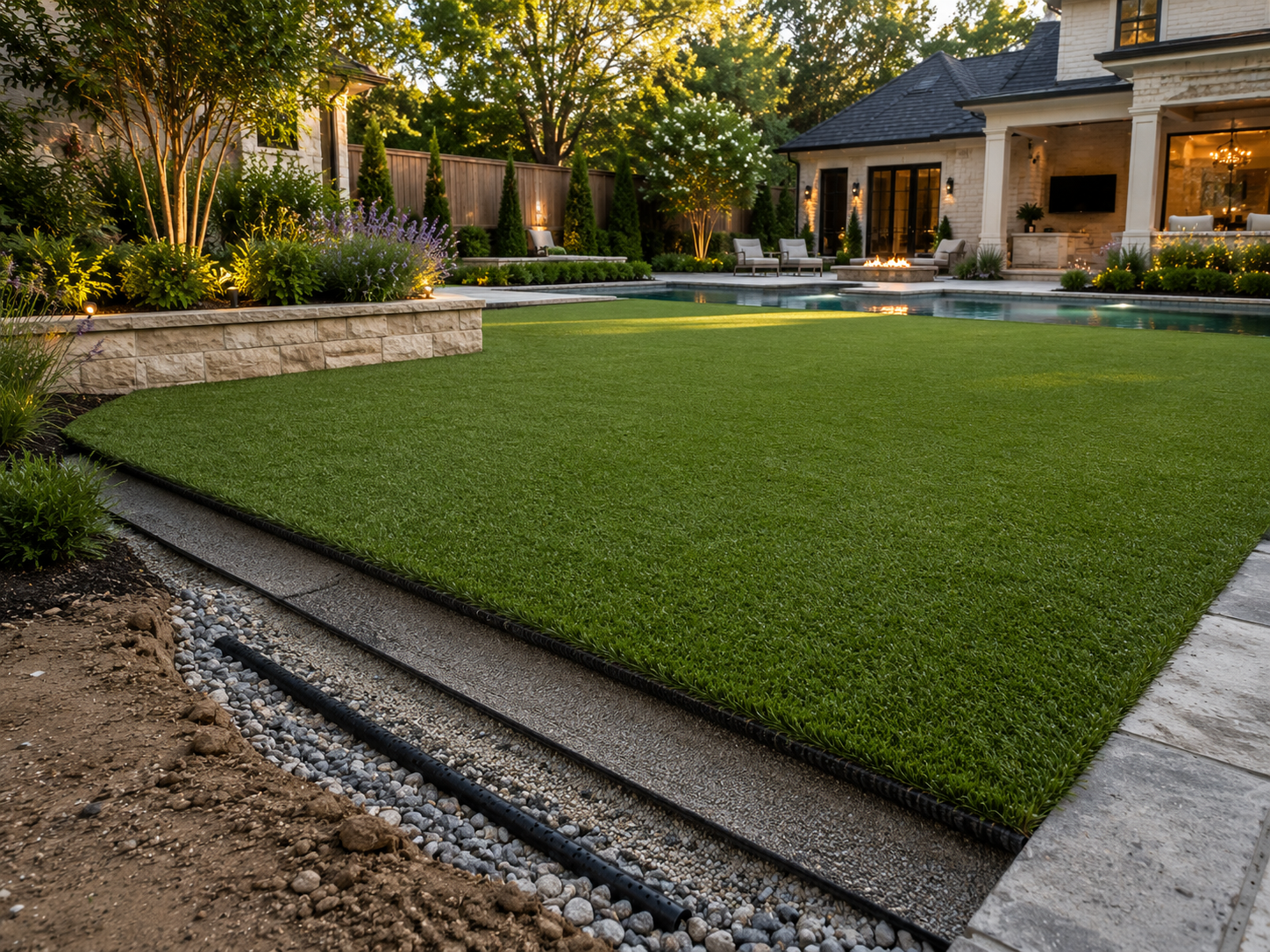
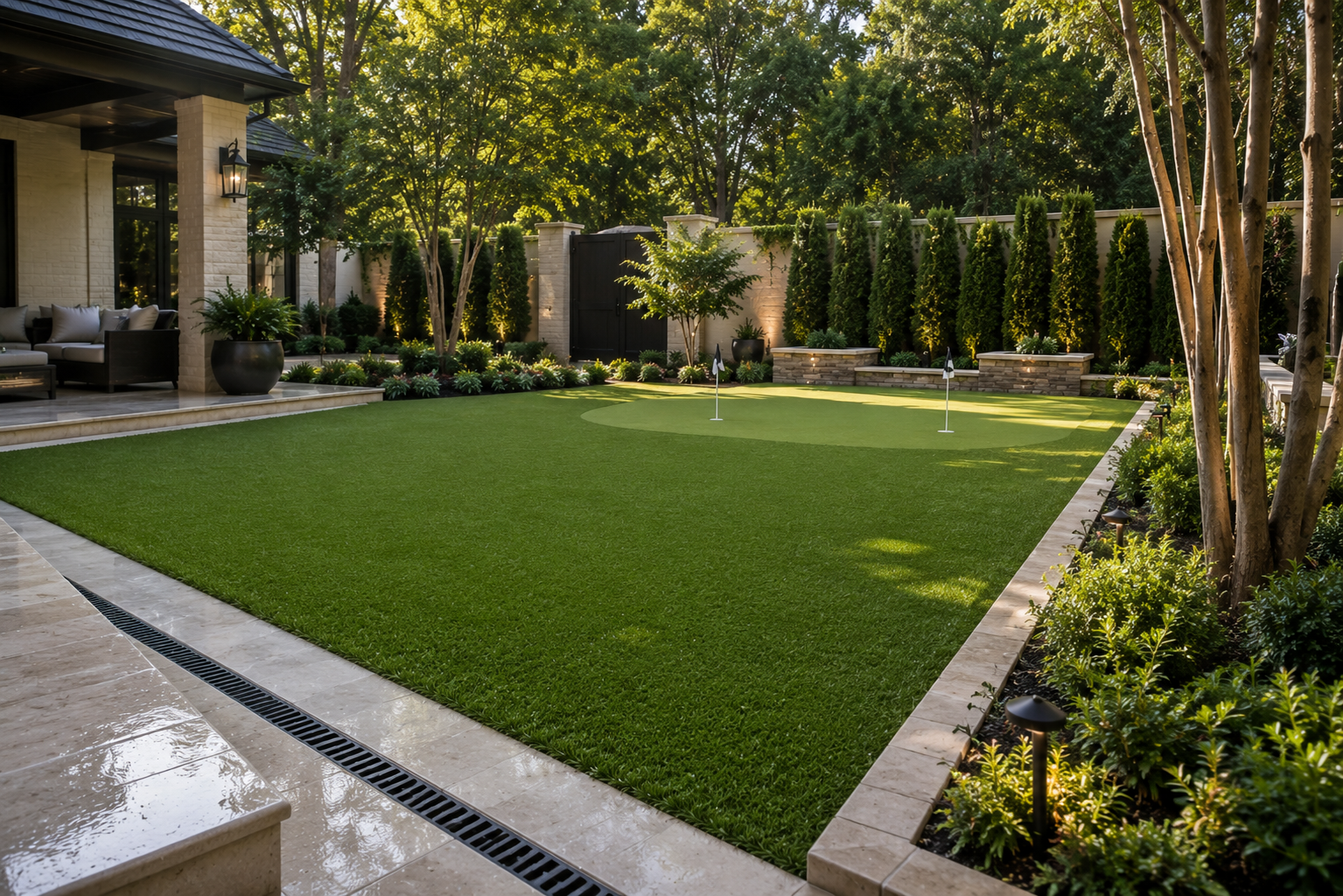
Artificial Turf Still Needs Proper Drainage
One misconception about artificial turf is that eliminating natural grass also eliminates drainage concerns. It does not.
The performance of artificial turf depends heavily on the preparation beneath it. A properly constructed base allows water to move through the turf and away from the area rather than accumulating beneath the surface.
In Houston, drainage planning should be an essential part of every professional artificial turf installation.
Signs Your Property May Have a Drainage Problem
Some drainage problems become obvious immediately after a storm. Others develop slowly over time.
Areas of lawn that remain wet long after rainfall
Water collecting near the foundation
Mulch repeatedly washing out of planting beds
Persistent muddy areas or standing water
Water collecting around patios or pool decks
Plants declining in consistently wet soil
Standing water along fences or property lines
Drainage grates frequently overflowing during heavy rainfall
Build Drainage Into Your Landscape From Day One
If you are considering a major landscape renovation, new pool, patio expansion, artificial turf installation, outdoor kitchen, or complete backyard transformation, drainage should be part of the conversation from the beginning.
F&G Landscape Design can evaluate your property as a complete environment where drainage, grading, construction, planting, irrigation, and outdoor living features work together.
Start Your Landscape DesignHouston Landscape Drainage FAQs
What is the best drainage solution for a Houston yard?
The correct solution depends on grading, soil conditions, roof runoff, existing drainage, neighboring elevations, and where water is collecting. Many properties benefit from a combination of grading, catch basins, French drains, channel drains, and underground piping.
What is the difference between a French drain and a catch basin?
A catch basin primarily collects surface water at a specific low point. A French drain collects water within saturated soil over a broader area. Some properties benefit from using both systems.
Can landscaping cause drainage problems?
Yes. New patios, pools, retaining walls, planting beds, artificial turf, and other improvements can change how water travels through a property.
Should drainage be installed before landscaping?
Ideally, drainage should be designed as part of the overall landscape plan and installed at the appropriate stage of construction so grading, irrigation, hardscaping, and planting can work together.
Can landscape drainage help protect my investment?
Yes. Proper drainage helps reduce standing water, erosion, saturated soil, and water accumulation around outdoor improvements, helping protect the appearance and long-term performance of the property.